

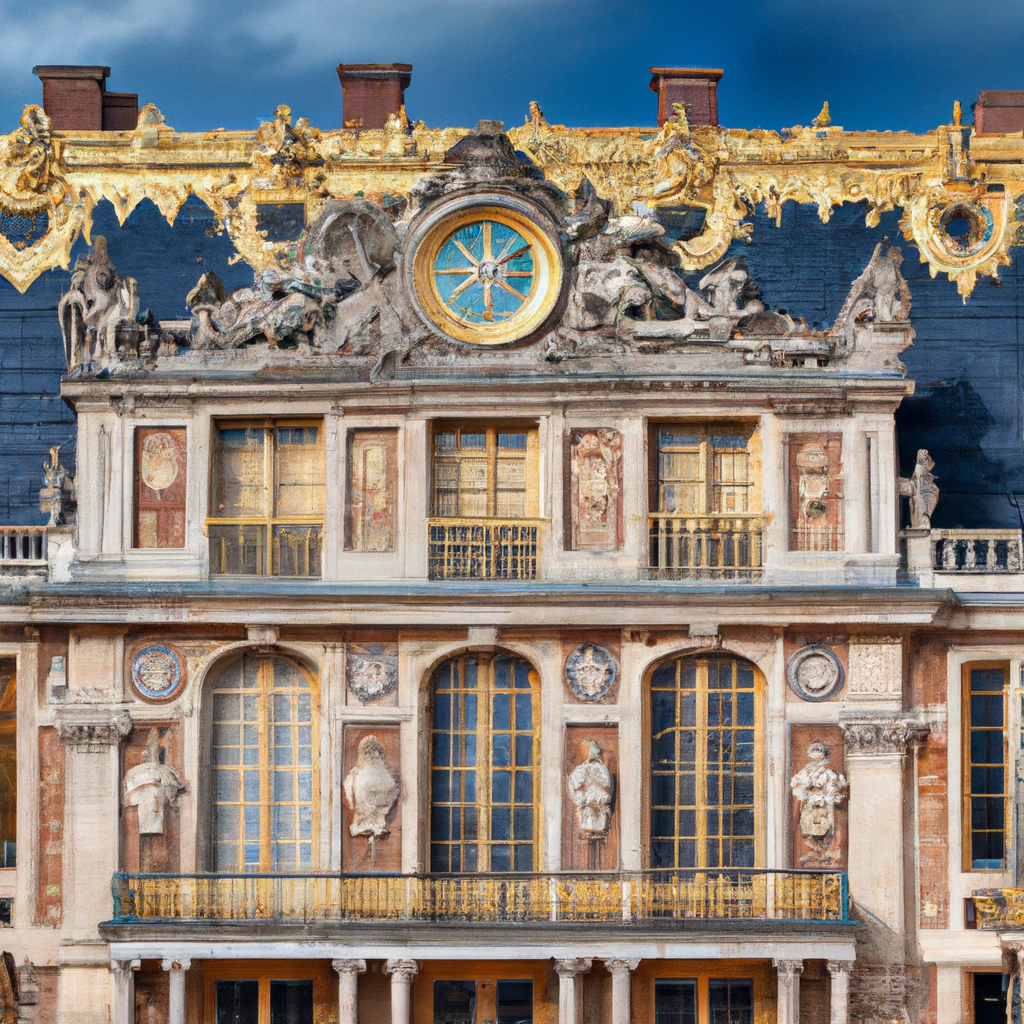

The sun rises over France as a proud reminder of the monarchy that had filled its golden chambers with opulence and grandeur centuries ago. The Palace of Versailles, one of the country’s most well-known landmarks, continues to be a living reminder of what life was like for French royalty during the late 17th century. Serving as a beautiful backdrop for the iconic architecture, lavish decor, and exquisite art pieces, the Palace of Versailles truly encapsulates the history and grandeur of France’s monarchs of old.
1. Magnificent Monarchy: Exploring the Palatial Palace of Versailles
The Palatial Palace of Versailles has long been a symbol of the might of the French Monarchy. This breathtaking palace stands as one of many brilliant examples of magnificence and grandeur in the country of France. Located just outside the modern capital of Paris, this palace has been beautifully preserved and maintained since it was first built in 1682 and is a must-see attraction for everyone who visits the area.
A wander through the many rooms and gardens of Versailles is a journey back in time; the architecture is steeped in history and immediately adds an air of sophistication and extravagance.
The palace is set amongst stunning gardens and fountains, featuring:
- An immense Orangery
- Groves of orange trees and pergolas
- Large reflective pools
- Grottoes and concealed statues
It is the incredible attention to detail that truly captures the essence of this incredible place.
Versailles is a remarkable and majestic royal estate that is sure to captivate even those who have seen it time and again. Sure to leave a lasting impression, the lavish interiors, gardens, park, and art collection have remained intact, like a living time capsule, for centuries.
2. From Nondescript Hunting Lodge to Stunning Versailles
Once little more than a nondescript hunting lodge, Chateau de Versailles is now one of the world’s most stunning and iconic palaces. Its history, though, has been one of upheaval, reinvention and resilience.
Although construction began in 1623 under King Louis XIII, it wasn’t until his son, Louis XIV, took power in 1661 that the lodge was transformed. With the help and guidance of two talented designers, Louis’ vision came to life, turning French dreams into a reality as the neglected hunting lodge slowly rose to grandeur.
From almost nothing, the lodge was overtaken to become a magnificent palace. Soon, Versailles was the envy of the world. New additions included lavish Baroque gardens, sculptures, fountains and even a water system. It also made room to house hundreds of members of the aristocracy to join the court of Louis XIV.
- Chapels and Theatres
- Constructed numerous chapels and theatres.
- Completed Grand Trianon in 1687.
- Marlborough Wing
- Added a special wing in 1710 for The Grand Duchess and as a token of appreciation for the victory over the French.
- Features an impressive hall with marble fireplaces and bold painted ceilings.
The palace went on to merit countless additions and renovations throughout the years, with the works of some of the best architects in the world — ranging from Jules Hardouin-Mansart to Richard Mique — adorning Versailles throughout the ages. Its transformation from a simple hunting lodge to an unparalleled masterpiece was surely a work of art in and of itself.
3. A Perfect Palace: Lavish Lavish Luxuries and Delights
When it comes to the perfect palace, you can expect to be spoiled for choice. Here, you’ll find lavish luxuries, and your every wish fulfilled.
Looking to make a statement? Nothing says opulence like grand ballroom suites and decadent chandeliers. Adorned in plush furnishings, wood-paneled walls and immense windows, you’ll feel like VIPs every time you step inside.
- The Crown Jewel: Soar to sky-high heights with stunning rooftop terraces and skydecks.
- A Room with a View: Every suite bubble over with breathtaking views, overlooking sprawling outdoor areas and sprawling landscapes.
Entertainment is a must in a palace, and the perfect palace has got it covered: go bowling on designer lanes, hit the ice-rink with friends, or relax at the outdoor pool and spa.
To make it a truly unforgettable experience, feast on gourmet cuisine and sip a cocktail while lounging on the deck of your private terrace. A perfect palace awaits you –who says dreams can’t come true?
4. Grandeur and Glided Glitz: A Glimpse of France’s Silver-Lined History
France’s glittering past is a tale as old as time, full of royal secrets, long lost romance, and glittering grandeur. From the splendors of Versailles to the captivating streets of Paris, French history is full of allure, gold-plated and bedecked with brio.
- The Glory of Versailles – Louis XIV lived in nothing short of the grandest luxury, from the gardens of Versailles to the palace’s opulent interiors. His throne was gilded and crusted with jewels, while his bedroom, salon, and antechamber were all swathed in fine fabrics and rare artwork.
- The Mysterious Madeline Parties – During the 16th century, French salons hosted secretive Madeline Parties, where a single female, or “Madeline”, would preside over a mystery-filled night of glamourous revelry. All of the guests would don masks, and the evening would be a dazzling display of couture, games, and dazzling works of art.
- The Belle Époque Splendor – France’s Belle Époque era was a time of extravagant wealth, and French jewelry, fashion, and interiors were bedecked in the flashiest and most luxurious of styles. Buildings around Paris dazzled with their gilded exteriors while the streets were filled with well-dressed fashionistas.
From the elaborate parties of Louis XIV to the mysteries of the Madeline parties, French history has a plethora of glittering stories. With its grandes splendeurs et petits riens, the country has been captivating the imaginations of those near and far for centuries with its luxe environs and shimmering atmosphere.
5. Captivating Courtiers: Taking a Peek Behind the Palace Walls
The Who: Courtiers
Behind the grandeur of a palace lies a cast of characters that bring it to life—the courtiers. Depending on the ruling monarch, courtiers could be expected to attend court, manipulate situations and politics, and even compete for the favour of their liege. They were the backbone of the court and, occasionally, the bane of its existence.
The When: Ancient to Modern Times
The role of the courtier is present in many different eras and cultures but is most well-known from the medieval and early-modern periods. From the Byzantines to the Incan civilization, courtiers existed to act as advisers to the ruler or monarch, to provide council and conversation, and to further the interests of their chosen ruler.
The Intrigue: Controversy and Scandal
The relationship between a monarch and his courtiers was often a complicated one, shaped by fidelity, favouritism, and competition. Though courtiers were highly respected for their knowledge and poise, they were often the source of controversy, whether that be through infusing politics into court life or engaging in salacious gossip.
The Impact: A Glimpse of Court Life
Despite the intrigues of court life, it’s safe to say that courtiers were, overall, integral to the day to day workings of a palace. They provided a glimpse into the extravagance and splendor of a court, while also providing an insight into the relationships between rulers and their subjects.
- The who: Courtiers
- The when: Ancient to modern times
- The intrigue: Controversy and scandal
- The impact: A glimpse of court life
The famed Palace of Versailles, evoking the grandeur of France’s monarchical past, continues to stand tall as a reminder of the complexities of European history. Its sweeping gardens, lavish interiors and stunning art and sculptures are a testament to its intricate beauty. The palace’s legacy will remain for centuries to come, and it will surely remain a cornerstone of European cultural heritage.